Faith
God’s Table of Grace: Welcome, Healing, and Radical Hospitality
The article explores God’s radical grace, inviting the broken and excluded to his table of fellowship, healing, and transformation. It highlights Christ’s inclusive ministry and the church’s call to embody this welcoming love today.
Dec 8, 2025By David Paul
A Table of Grace
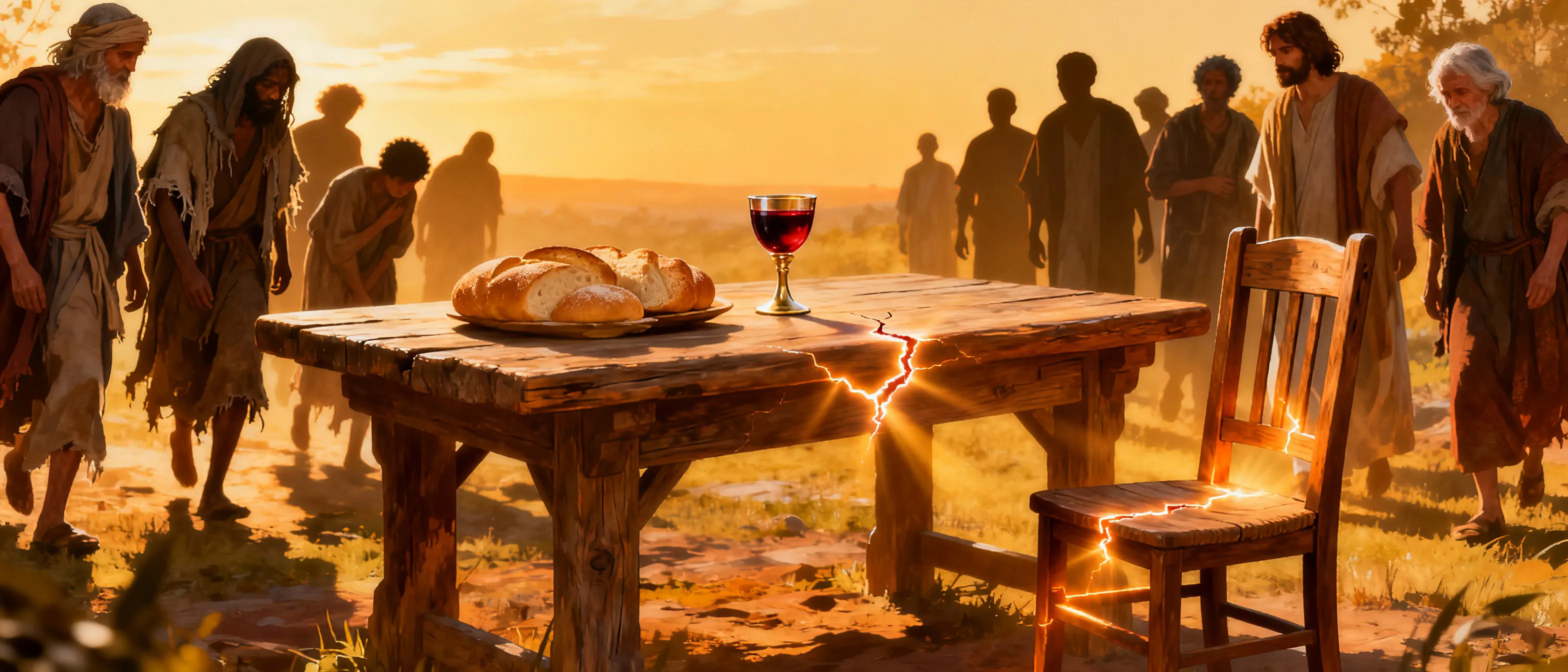
In every culture, a table symbolises welcome, fellowship, and belonging. Yet not everyone receives an invitation to sit at society’s table. The poor, the outcast, the morally fallen, and the broken-hearted often find themselves shut out. The Gospel, however, reveals a radical reversal: the very ones the world excludes, God calls to his table. Christ’s ministry displayed this invitation with both startling boldness and tender compassion. He took what was fractured and despised, and he made it whole in himself.
World Disqualifies, Christ Welcomes
Human societies often measure worth by strength, success, or reputation. Failure, weakness, and shame disqualify people from social acceptance. Public sinners in the Gospels, such as tax collectors and prostitutes, illustrate this dynamic. They were branded as unworthy, labelled beyond redemption. Yet Christ sat with them (Luke 5:29–32). He did not affirm their sin, but he affirmed their humanity by offering fellowship.
This principle stretches beyond the first century. Modern society values achievement, wealth, and appearance. Those who struggle—due to poverty, addiction, divorce, or depression—become unseen or marginalised. But God in Christ reverses the exclusion. Where the world sees a liability, God sees a son or daughter in need of redemption.
The Biblical Motif of the Table
The image of God’s table runs through Scripture as a symbol of fellowship and covenant. In Psalm 23, David declares, “You prepare a table before me in the presence of my enemies” (Psalm 23:5). Here, the table symbolises security, abundance, and acceptance despite hostility. The prophet Isaiah extends this vision with a promise of a universal feast: “The Lord of hosts will make for all peoples a feast of rich food, a feast of well-aged wine” (Isaiah 25:6).
Christ fulfilled this imagery in his ministry. He ate with sinners, fed the hungry, and instituted the Lord’s Supper as a sign of his new covenant (Luke 22:19–20). Each meal pointed forward to the great banquet of the kingdom, where the broken find healing and the excluded find welcome.
The Scandal of Grace
The Pharisees’ greatest offence at Christ was not his miracles but his company. They asked, “Why does your teacher eat with tax collectors and sinners?” (Matthew 9:11). To eat with someone in the ancient world signified fellowship and acceptance. For the religious elite, such fellowship meant impurity. For Christ, however, it embodied mission. He came not to call the righteous but sinners.
Grace is scandalous because it welcomes the undeserving. It breaks the logic of merit and challenges human pride. The parable of the prodigal son (Luke 15:11–32) captures this shock. The younger son, who squandered everything, returned expecting servitude. Instead, the father clothed him, fed him, and restored him to the status of a son. The older brother, echoing the world’s resentment, could not accept such a radical welcome. God’s table exposes not only the comfort of the broken but also the discomfort of the self-righteous.
Brokenness as the Entrance, Not the Barrier
Contrary to the world’s systems, brokenness does not disqualify; it qualifies. Christ’s Beatitudes bless those the world despises: the poor in spirit, the mourners, the meek, the persecuted (Matthew 5:3—12). These are not virtues in themselves but conditions that reveal dependence on God.
The tax collector in Christ’s parable prayed with a bowed head, “God, be merciful to me, a sinner” (Luke 18:13). He left justified, while the Pharisee, confident in his righteousness, did not. Brokenness humbled him to seek mercy, and mercy became his entrance. God’s table, therefore, is not for the strong who boast but for the weak who ask.
Christ’s Table and the Church’s Mission
The Church inherits this vision of the table. At the Lord’s Supper, the Church proclaims that broken bread and poured wine are for broken people. Yet the Church often wrestles with reflecting this reality. Too often, congregations mirror worldly hierarchies of wealth, influence, or respectability. James warns against showing partiality to the rich over the poor (James 2:1—7). To welcome the broken-hearted and excluded is not optional but essential to Christian witness.
Historical examples reveal both failures and faithfulness. In many revival movements, the marginalised became central. The Moravians welcomed slaves; the early Methodists gathered coal miners; William Booth’s Salvation Army reached the poor in London. Each movement embodied God’s table by refusing to exclude the broken.
From Shame to Belonging: Testimonies of Transformation
The power of God’s table lies not only in invitation but in transformation. Zacchaeus, the despised tax collector, met Christ and pledged restitution and generosity (Luke 19:1—10). Mary Magdalene, once tormented, became the first witness to the resurrection (John 20:14—18). The Apostle Paul, once the persecutor, became the apostle to the Gentiles (1 Timothy 1:13—16).
These stories illustrate how belonging produces transformation. God’s welcome does not leave people in their brokenness; it renews them. Belonging gives courage, forgiveness brings freedom, and grace enables growth. Where the world demanded worthiness before fellowship, God offers fellowship that creates worthiness.
The Future Feast: Hope Beyond Exclusion
The final vision of Scripture presents a table where exclusion is abolished: “Blessed are those who are invited to the marriage supper of the Lamb” (Revelation 19:9). Here, every tribe, tongue, and nation gathers, not based on status but on the merit of Christ. The wholeness of God’s kingdom will swallow the brokenness of this world.
This hope sustains believers in their present wounds. Every time the Church gathers at the Lord’s Table, it rehearses the future feast. It reminds the broken that exclusion is temporary and that God’s welcome is eternal.
Extending God’s Welcome Through Hospitality
Believers are called not only to receive God’s welcome but to extend it. Hospitality becomes a spiritual practice. Paul exhorts Christians to “contribute to the needs of the saints and seek to show hospitality” (Romans 12:13). Hospitality is not simply hosting friends; it is welcoming the stranger, the poor, and the broken.
Practical expressions include opening homes to the lonely, including the overlooked in community life, and advocating for those society dismisses. In workplaces, schools, and neighbourhoods, Christians can embody God’s table by treating the marginalised with dignity and grace.
God’s Invitation: From Exclusion to Eternal Family
When the world disqualifies, God invites. When society excludes, God welcomes. When hearts are broken, God heals at His table. This truth shapes Christian life, mission, and hope. The table is not merely a metaphor; it is the pattern of the Gospel itself. Christ, broken for us, makes broken people whole.
Therefore, the Church must embody this radical hospitality. To sit at God’s table is to be both healed and sent, welcomed and transformed. The broken are not only guests; they become family. And this family stretches from now into eternity, where exclusion ends, and God’s embrace is final.
(David Paul, a devoted member of the church, passionately ignites the imaginations of aspiring writers with his eloquent prose.)